

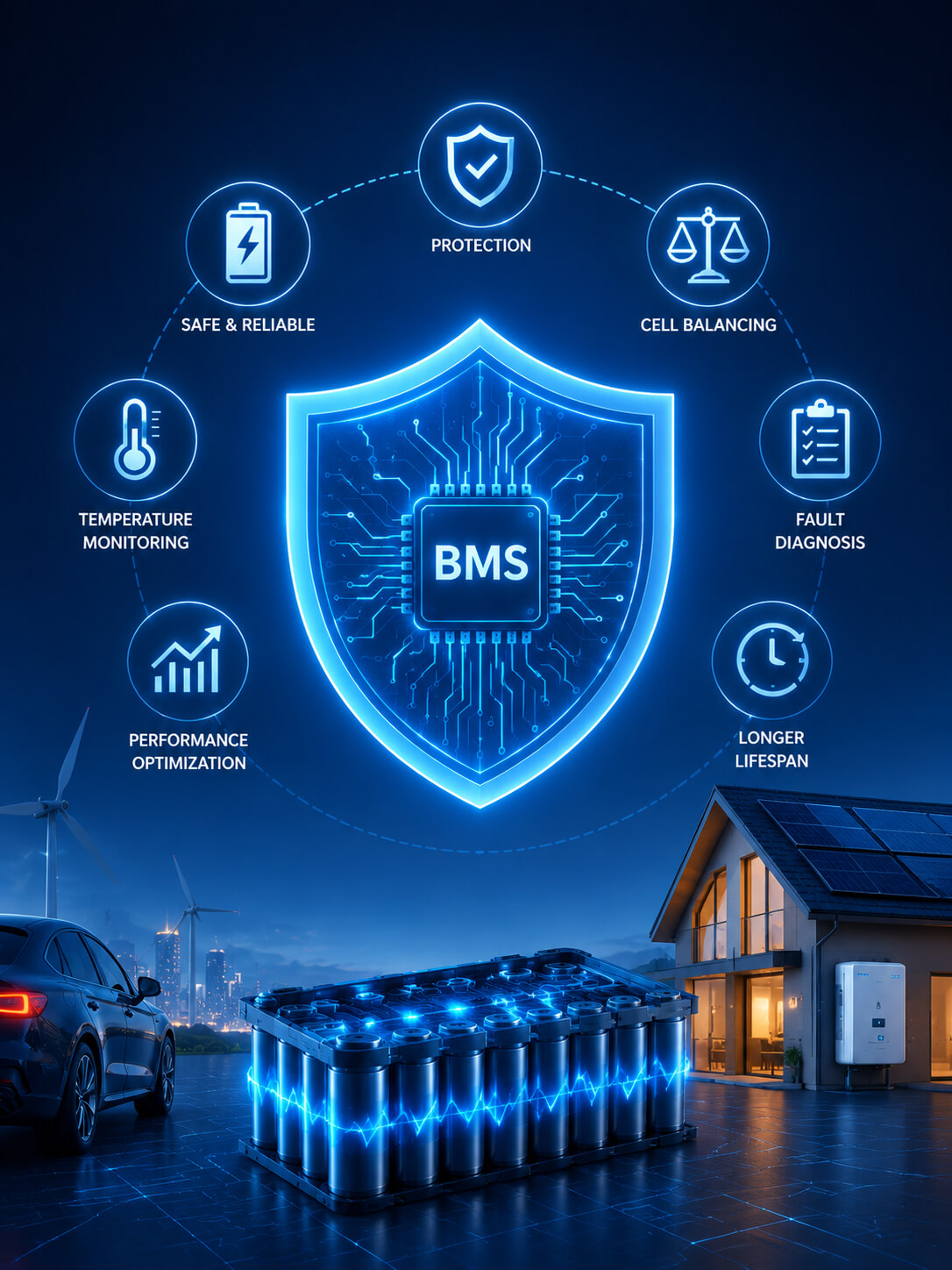
Lithium batteries are widely used in energy storage systems, electric vehicles, golf carts, RVs, marine applications, and many other industries. While battery cells are the core of every battery pack, there is another critical component that ensures safe and reliable operation: the Battery Management System (BMS).
A BMS is often referred to as the "brain" of a lithium battery pack. It continuously monitors battery conditions and protects the battery from unsafe operating situations. Without a reliable BMS, even a high-quality lithium battery pack may experience reduced performance, shortened lifespan, or safety risks.
In this article, we will explain what a Battery Management System is and why it plays such an important role in modern lithium battery applications.
What Is a Battery Management System?
A Battery Management System (BMS) is an electronic control system designed to monitor, protect, and manage lithium battery packs.
Its primary purpose is to ensure that the battery operates within safe limits during charging, discharging, and storage.
A BMS continuously monitors important battery parameters, including:
- Battery voltage
- Cell voltage
- Charge and discharge current
- Battery temperature
- Battery status
When abnormal conditions occur, the BMS automatically activates protection functions to prevent battery damage.
Simply put, a lithium battery pack cannot operate safely and efficiently without a properly designed BMS.
Main Functions of a BMS
Overcharge Protection
Overcharging is one of the most common causes of lithium battery damage.
If the battery voltage exceeds the safe limit during charging, battery performance may deteriorate and safety risks may increase.
A BMS monitors battery voltage and disconnects charging when necessary to prevent overcharging.
Over-discharge Protection
Excessive discharge can permanently damage lithium battery cells.
When battery voltage drops below the preset threshold, the BMS automatically stops discharging to protect the battery.
This helps extend battery lifespan and maintain stable performance.
Overcurrent Protection
Every battery system has a maximum allowable current.
If the current becomes too high, excessive heat may be generated, which can damage battery cells, cables, and connectors.
A BMS continuously monitors current flow and activates protection when abnormal current conditions are detected.
Short Circuit Protection
Short circuits can cause extremely high current within a very short period.
To prevent damage and safety hazards, the BMS can quickly disconnect the battery when a short circuit occurs.
Temperature Protection
Temperature has a significant impact on battery safety and performance.
High temperatures may accelerate battery aging, while low temperatures can affect charging efficiency.
Most Smart BMS solutions include temperature monitoring functions to ensure safe operation under different environmental conditions.
Smart Monitoring Features
Modern Smart BMS solutions provide much more than basic protection.
Many systems now support real-time battery monitoring through communication interfaces such as:
- Bluetooth
- UART
- RS485
- CAN Bus
These features allow users to monitor battery voltage, current, temperature, and operating status through mobile applications, PC software, or external control systems.
For energy storage systems and intelligent battery applications, communication capabilities have become increasingly important.
Why Is a BMS Important?
A Battery Management System directly affects the safety, reliability, and service life of a lithium battery pack.
Improved Safety
The BMS protects the battery from unsafe operating conditions and helps reduce the risk of battery failure.
Longer Battery Life
By preventing overcharge, over-discharge, and overheating, a BMS helps maximize battery cycle life.
Better Performance
Accurate monitoring ensures that the battery operates efficiently and consistently.
Easier System Management
Smart communication functions make battery monitoring and maintenance more convenient.
Reliable Operation
Whether used in energy storage systems or electric mobility applications, a quality BMS helps ensure stable long-term performance.
Applications of Smart BMS
Battery Management Systems are widely used in various lithium battery applications, including:
- Energy Storage Systems (ESS)
- Solar Energy Storage
- Electric Bicycles
- Electric Motorcycles
- Golf Carts
- RV Batteries
- Marine Batteries
- AGV Systems
- Robotics
- Lead-acid Replacement Batteries
Different applications may require different voltage ranges, current ratings, and communication functions, making proper BMS selection extremely important.
Why Choose JBD Smart BMS?
JBD specializes in intelligent Battery Management Systems for lithium battery applications.
JBD Smart BMS solutions offer:
- Comprehensive protection functions
- Bluetooth monitoring
- UART, RS485, and CAN communication
- LiFePO4 and Li-ion compatibility
- Reliable performance
- Energy storage integration support
- Electric mobility solutions
With years of experience in lithium battery management technology, JBD provides professional BMS solutions for customers worldwide.
Conclusion
A Battery Management System is an essential component of every lithium battery pack. It protects the battery, improves performance, extends service life, and provides intelligent monitoring capabilities.
Whether you are building an energy storage system, an electric vehicle battery pack, or a lead-acid replacement battery, choosing a reliable BMS is critical for long-term success.
If you are looking for a professional Smart BMS solution, contact JBD BMS for product recommendations and technical support.